

Select your framework to get started:

Prerequisites

  • PHP 8.2 or greater
  • Laravel 9.x or greater
  • A GitHub, GitLab, or Bitbucket account
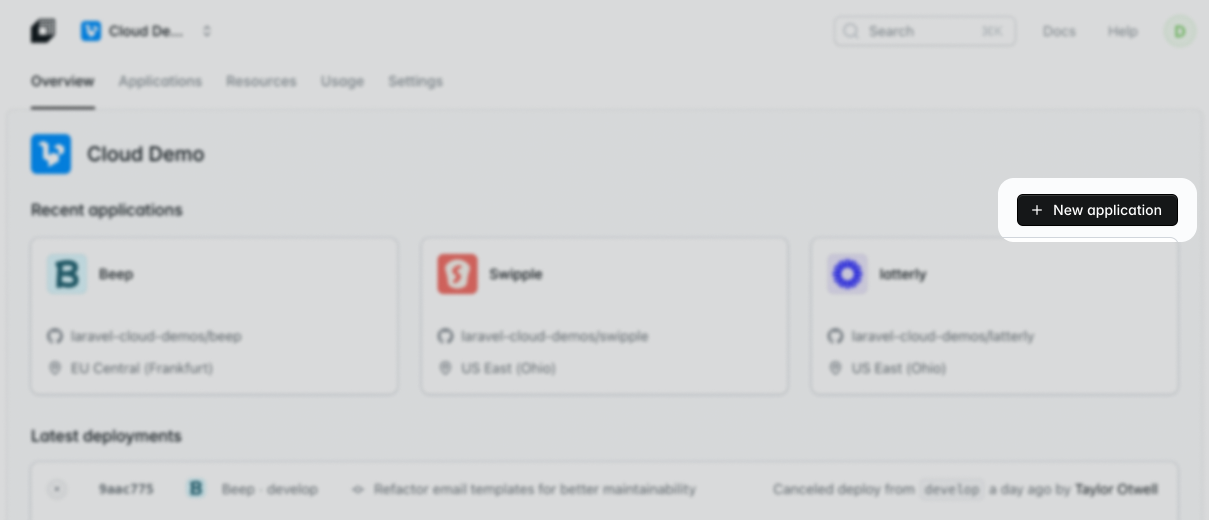
1

Go to your main Laravel Cloud dashboard page and select + New application.

2

Connect your Git provider

Select Continue with GitHub, GitLab, or Bitbucket. A new tab / window will open. Sign in to your Git provider and select the user / organization and repositories you want to give Laravel Cloud access to.
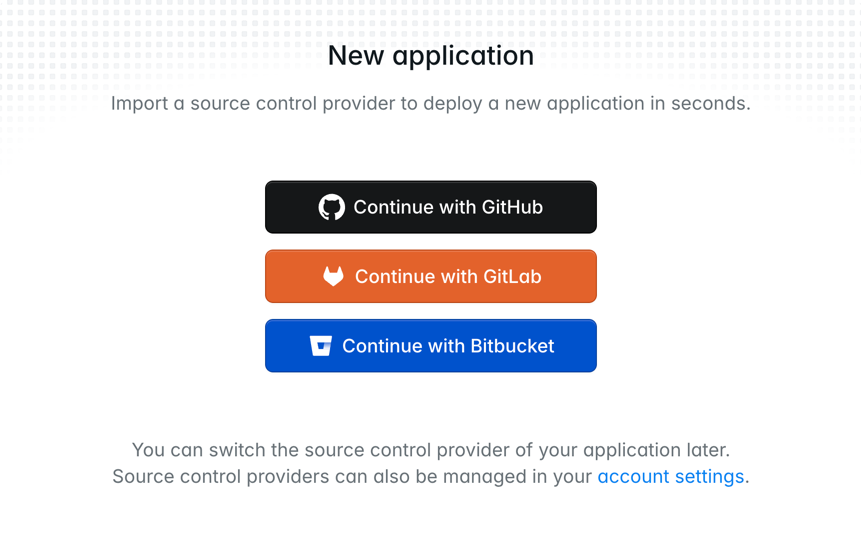
After completing the Git provider authentication flow, you will be redirected back to Laravel Cloud.
3

Create a new application

Select the repository you want to use, name your Laravel Cloud application, and select a Region where your application will deploy. Then, click Create Application.
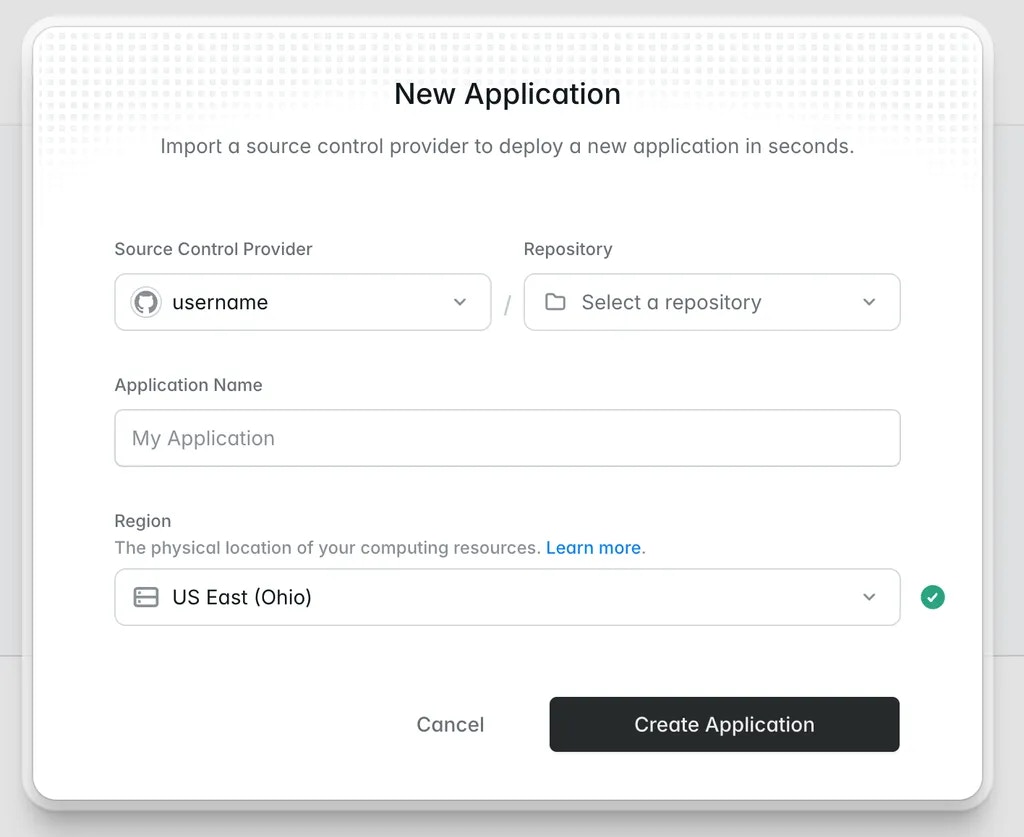
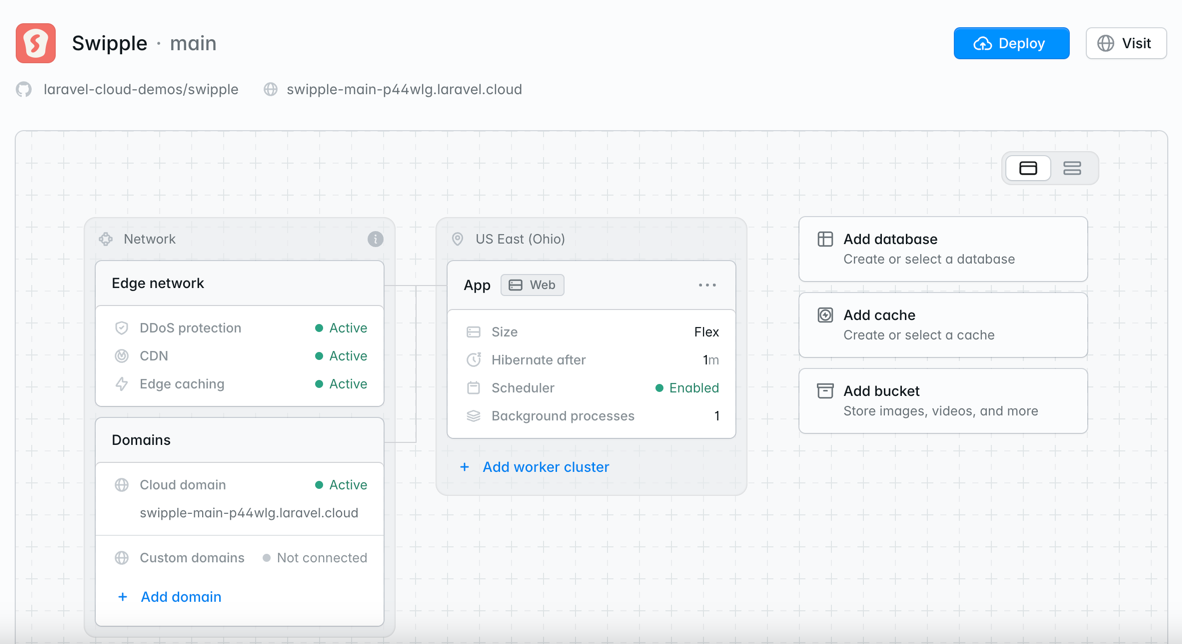
Your application will be created along with a default environment. You will then be redirected to your application’s default environment overview page.
4

Select the PHP runtime

In your environment settings, confirm the runtime is set to PHP and select the PHP version that matches your application’s requirements.
5

Set build and deploy commands

Set your build command to install dependencies and compile assets:
composer install --no-dev && npm run build
Set your deploy command to run database migrations on each deployment:
php artisan migrate --force
6

Add environment variables

At minimum, set your APP_KEY. You can generate one locally and paste the value into the Laravel Cloud dashboard:
php artisan key:generate --show
If your application uses a database, connect a MySQL or Postgres resource from the infrastructure canvas; Laravel Cloud will automatically inject the connection environment variables.
7

Deploy

Click the Deploy button. Laravel Cloud will build your application, run your deploy command, and route traffic to the new instance.
Congratulations! Your Laravel application is live on Laravel Cloud! Continue reading to learn about environments, databases, managed queues, and more.